
ICF Certification May 12, 2026
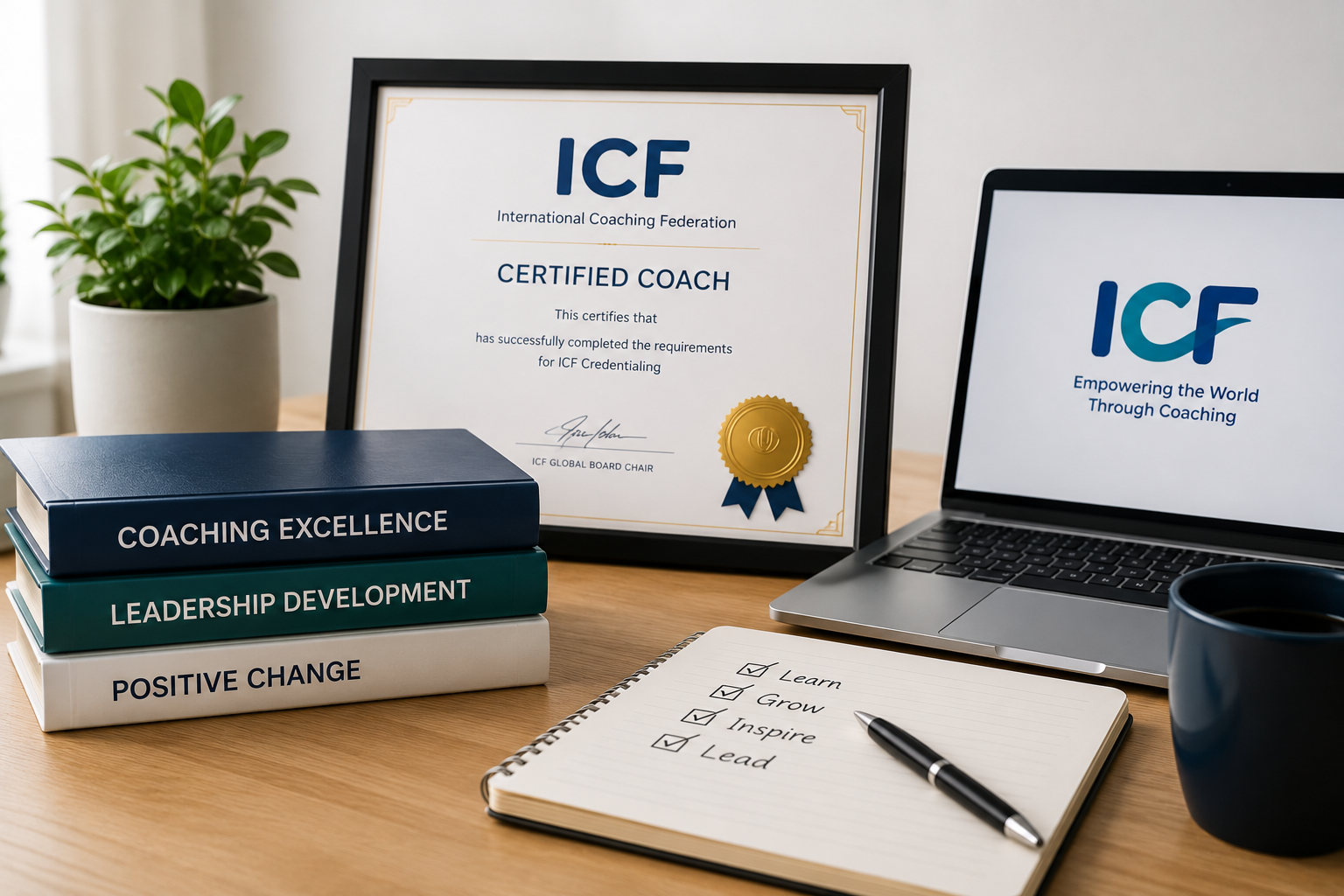
Complete Guide to ICF Coaching Certification: ACC, PCC, MCC, Costs & Requirements
By Adhigam Avenue
This guide explains how ICF coaching certification works, how ACC, PCC, and MCC differ, what education and experience are required, how Level 1 and Level 2 programs fit, and how to choose an affordable, credible coaching education pathway.
Quick Answer: How Do You Become ICF Certified?
To become ICF credentialed, candidates generally complete coach-specific education, build coaching experience, complete mentor coaching where required, complete the applicable performance evaluation or skills validation process, pass the applicable ICF exam, and submit an application to ICF. Requirements vary by ACC, PCC, and MCC level.
What Is ICF Coaching Certification?
ICF coaching certification is a professional credential awarded by the International Coaching Federation after a coach meets the education, experience, mentor coaching, evaluation, exam, and application requirements for the selected credential level.
It is important to separate individual credentialing from program accreditation. Coaches earn credentials such as ACC, PCC, or MCC. Training providers may hold ICF accreditation for specific education programs.
The Three Levels of ICF Credentials
ICF offers three progressive credential levels. The table below summarizes the basic differences candidates usually compare first.
| Credential | Education | Experience | Mentor Coaching | Exam | Best For |
|---|---|---|---|---|---|
| ACC | 60+ hours | 100+ hours | 10 hours | ACC Exam | New and developing coaches |
| PCC | 125+ hours | 500+ hours | 10 hours | ICF Credentialing Exam | Practicing professional coaches |
| MCC | 200+ hours | 2,500+ hours | 10 hours | ICF Credentialing Exam | Highly experienced coaches seeking master-level credentialing |
Note: ICF requirements can change. Candidates should verify current requirements on the official ICF website before applying.
Official ICF links: ACC overview, PCC overview, MCC overview, and credential overview.
ICF Accreditation Levels Explained: Level 1, Level 2, and Level 3
Level 1 - ACC Pathway Support
Level 1 programs are designed to support the ACC pathway. Level 1 programs include coach education, mentor coaching, and performance evaluation/skills validation according to ICF requirements.
Level 2 - PCC Pathway Support
Level 2 programs are designed to support the PCC pathway. Level 2 programs include advanced coach education, mentor coaching, and performance evaluation/skills validation according to ICF requirements.
Level 3 - MCC Preparation
Level 3 programs are designed for advanced coach education toward MCC preparation. Candidates should confirm current ICF MCC requirements and prerequisites before choosing a pathway.
Explore Adhigam Avenue's ICF Level 1 ACC Program, ICF Level 2 PCC Program, and Upcoming Trainings.
How Much Does ICF Certification Cost?
The total cost of ICF certification depends on the credential level, application path, training provider, whether mentor coaching and evaluation are included, and whether the candidate is an ICF member. ICF credential application fees are separate from coach training program fees.
Current ICF Credential Application Fees
| Credential / Path | ICF Member Fee | Non-Member Fee | Review Time |
|---|---|---|---|
| ACC Level 1 / Level 2 Path | $175 USD | $325 USD | 4 weeks |
| ACC Portfolio Path | $475 USD | $625 USD | 14 weeks |
| PCC Level 2 Path | $375 USD | $525 USD | 4 weeks |
| PCC Portfolio Path | $750 USD | $900 USD | 18 weeks |
| MCC Level 3 / Portfolio Path | $675 USD | $825 USD | 18 weeks |
Fees and review times may change. Candidates should confirm current fees on the official ICF credential application page before applying.
Read the full ICF Coaching Certification Cost Guide.
Affordable vs. Cheap: How to Choose the Right ICF Coaching Program
A low-cost program is not automatically the best choice. Candidates should compare what is included and whether the program supports the correct credential pathway.
- ICF accreditation status
- Total coach education hours
- Mentor coaching inclusion
- Performance evaluation or skills validation inclusion
- Live practice opportunities
- Faculty credentials and experience
- LMS/materials access
- Payment options
- Documentation support
- Post-program guidance
Compare the ICF Level 1 ACC Program, review Upcoming Trainings, or book a free session before deciding.
2027 Mentor Coaching and MCS Changes: Why This Matters
ICF has announced changes related to mentor coaching and credentialing beginning in 2027. Coaches pursuing credentials or providing mentor coaching should pay close attention to Mentor Coach Specialization updates and related requirements.
Adhigam Avenue offers MCS learning options for different needs:
- MCS Experienced Mentor Coaches - Self-Paced
- MCS Experienced Mentor Coaches - Live
- MCS Standard Path Essentials - 41 Hours
- MCS Standard Path Complete - 62 Hours
Use the MCS Pathway Guide to compare these options. Completion of an education program does not guarantee ICF approval; ICF makes final credentialing and specialization decisions.
Step-by-Step: Your Path to ICF ACC Certification
Step 1: Choose an ICF-accredited Level 1 program
Compare program accreditation, schedule, inclusions, faculty, practice opportunities, and documentation support.
Step 2: Complete coach education and program activities
Attend required learning sessions, complete course activities, and participate in practice and reflection.
Step 3: Complete mentor coaching as part of the Level 1 program
For the Level 1 path, mentor coaching is completed as part of the education program.
Step 4: Complete the applicable performance evaluation or skills validation process
Follow the process required for the cohort and current ICF Level 1 requirements.
Step 5: Build and document 100+ coaching experience hours
Candidates maintain their own coaching-hour records and should confirm that their hours meet ICF rules.
Step 6: Submit ACC application to ICF
Apply through the ICF website and submit the applicable documentation and fee.
Step 7: Pass the ACC Exam
Candidates must pass the applicable exam. Review ICF's credential exam information for current details.
Note: The exact sequence may vary depending on the candidate's education path, coaching hours, cohort timing, and current ICF requirements.
Is ICF Coaching Certification Worth It?
For many coaches, ICF credentialing can support credibility, professional confidence, and access to clients or organizations that value recognized coaching standards. The return on investment depends on the coach's niche, pricing, business development, practice hours, and ability to convert training into paid coaching work.
Certification is not a guarantee of income, clients, or employment.
Frequently Asked Questions
What is ICF coaching certification?
ICF coaching certification is a professional credential awarded by the International Coaching Federation after a coach meets education, experience, mentor coaching, evaluation, exam, and application requirements for the selected credential level.
What is the difference between ACC, PCC, and MCC?
ACC is the entry-level credential, PCC is the professional-level credential, and MCC is the master-level credential. Each level requires more coaching education and coaching experience.
What is the easiest ICF credential to start with?
Most new coaches begin with ACC through an ICF Level 1 program because Level 1 is designed to support the ACC pathway.
How many training hours do I need for ACC?
ACC requires at least 60 hours of coach-specific education.
How many coaching experience hours do I need for ACC?
ACC requires at least 100 hours of coaching experience.
Does a Level 1 program include mentor coaching?
For the Level 1 or Level 2 path, mentor coaching is completed as part of the education program. Candidates using other paths should check current ICF mentor coaching requirements.
Is the ICF exam required?
Yes. Candidates must pass the applicable ICF exam for the credential they are pursuing.
Can I complete ICF coach training online?
Yes. Many ICF-accredited programs are delivered online through live, interactive sessions.
How much does ICF certification cost?
The total cost depends on the training program, application path, ICF membership status, mentor coaching, evaluation, exam-related costs, and optional preparation resources.
What is the cheapest way to become an ICF coach?
The cheapest route is not always the best route. Candidates should compare accreditation, included mentor coaching, evaluation, faculty support, payment options, and documentation support.
What is the difference between ICF certification and ICF accreditation?
Certification or credentialing applies to individual coaches. Accreditation applies to coaching education programs or providers.
Does completing an ICF-accredited program guarantee an ICF credential?
No. Completing an ICF-accredited program provides education/program completion documentation, but the credential is awarded separately by ICF after the candidate meets all applicable requirements.
Ready to Start Your ICF Coaching Journey?
Explore Adhigam Avenue's ICF Level 1 ACC program, compare upcoming cohorts, and book a free pathway conversation before choosing your next step.
Explore ICF Level 1 ACC Program ICF ACC Certification Requirements ICF PCC Certification Requirements Affordable ICF Coaching Certification Compare ICF Coaching Programs ICF 2027 Mentor Coaching and MCS Changes View Upcoming Trainings Book Free Session Compare Certification Costs